AI in Data-Driven Decision Making, Organizational Change, and Ethical Considerations in Business Strategy


Downloads
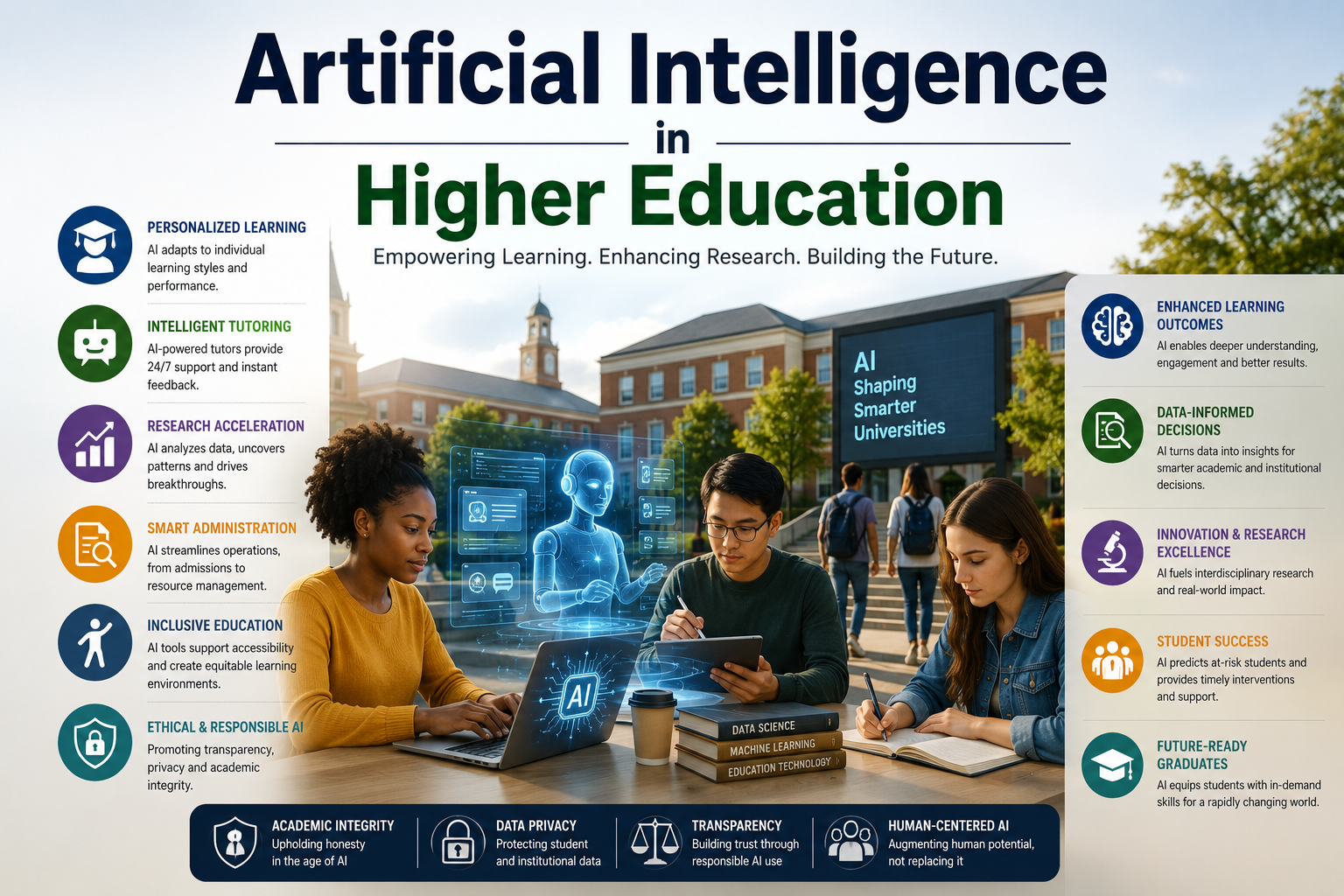
The report examines how Artificial Intelligence (AI) has revolutionised learning and competence building around programming skills, especially how it is being used in individualised learning, AI-based educational portals and the development of programming abilities. Online learning platforms such as Coursera, edX, and AI-based tutoring systems have now integrated AI to give personalised suggestions, monitor progress and offer immediate feedback. Intelligent machines such as GitHub Copilot and Replit are also transforming the way people learn to program as they help in generating code, debugging errors, and provide real-time instruction. Another finding of the report is the impact of AI on the kind of competencies needed in the technology sector. The ever-growing need to be AI-friendly among programmers has increased as AI tools become a major asset in most industries. Nevertheless, in spite of its positive aspects, the report also considers some of the central challenges surrounding the implementation of AI in education. Also, the ethically problematic aspect of AI in education includes issues concerning the privacy of data, biases of algorithms, and transparency. At its conclusion, the report makes several recommendations to educational institutions, businesses, and policymakers to prioritise the ethical use of AI, encourage fair access to AI tools, and invest in the education of educators and workers to best use AI technologies.
Abdellatif, S. H. R. (2025). The Intersection of AI Ethics and Corporate Social Responsibility: A Case of AI-Driven RegTech in the Banking Industry. SSRN Electronic Journal. https://doi.org/10.2139/ssrn.5261863
Abdul Basit, S., Gharleghi, B., Jafari, M., Ravan Ramzani, S. and Horam, P. (2025) ‘The Impact of AI Technology on Firms’ Service Innovation in Business’, Journal of Information Economics, 3(2), p. 50. https://doi.org/10.58567/jie03020004
Abdulrahim, A., Abdulrahim, A., Haddoud, M. Y., & Obeidat, B. (2025). Navigating the landscape of big data analytics adoption in the UAE public sector. Journal of Business Analytics, 1–15. https://doi.org/10.1080/2573234x.2025.2533223
Adewale, M. D., Azeta, A., Abayomi-Alli, A., & Sambo-Magaji, A. (2024). Impact of artificial intelligence adoption on students’ academic performance in open and distance learning: A systematic literature review. Heliyon, 10(22), e40025. https://doi.org/10.1016/j.heliyon.2024.e40025
Akçapınar, G., & Sidan, E. (2024). AI chatbots in programming education: guiding success or encouraging plagiarism. Discover Artificial Intelligence, 4(1). https://doi.org/10.1007/s44163-024-00203-7
Aktas, E., & Meng, Y. (2017). An Exploration of Big Data Practices in Retail Sector. Logistics, 1(2), 12. https://doi.org/10.3390/logistics1020012
Alamu, R. (2025). Human-AI Collaboration: The Future of Work and Leadership in the AI Era. ResearchGate. https://www.researchgate.net/publication/389966033_Human-AI_Collaboration_The_Future_of_Work_and_Leadership_in_the_AI_Era
Alenezi, M., & Akour, M. (2025). AI-Driven Innovations in Software Engineering: A Review of Current Practices and Future Directions. Applied Sciences, 15(3), 1344. https://doi.org/10.3390/app15031344
Ali, O., Murray, P. A., Momin, M., Dwivedi, Y. K., & Malik, T. (2023). The effects of artificial intelligence applications in educational settings: Challenges and strategies. Technological Forecasting and Social Change, 199, 123076. https://doi.org/10.1016/j.techfore.2023.123076
Al-Surmi, A., Bashiri, M., & Koliousis, I. (2021). AI based decision making: combining strategies to improve operational performance. International Journal of Production Research, 60(14), 4464–4486. https://doi.org/10.1080/00207543.2021.1966540
Amola, M. (2025). Ethical Considerations in AI-Driven Business Strategies. ResearchGate. https://www.researchgate.net/publication/389879900_Ethical_Considerations_in_AI-Driven_Business_Strategies
Ateeq, K., Oswal, N., Jawabri, A., Masaeid, T. A., Alquqa, E. K., Basha, S. E., & Alami, R. (2025). The Transformative Impact of Artificial Intelligence (AI) on Organisational Behaviour (OB): A Study of Employee Engagement, Performance, and Ethical Implications. Journal of Posthumanism, 5(4). https://doi.org/10.63332/joph.v5i4.1221
Atienza-Barba, M., De La Cruz Del Río-Rama, M., Meseguer-Martínez, Á., & Barba-Sánchez, V. (2024). Artificial intelligence and organizational agility: An analysis of scientific production and future trends. European Research on Management and Business Economics, 30(2), 100253. https://doi.org/10.1016/j.iedeen.2024.100253
Babalghaith, R., & Aljarallah, A. (2024). Factors Affecting Big Data Analytics Adoption in Small and Medium Enterprises. Information Systems Frontiers. https://doi.org/10.1007/s10796-024-10538-2
Bandara, W. M. H. K., & Malalage, G. S. (2025). Artificial Intelligence (AI) in Business: A Systematic Literature Review. Journal of Business and Technology, 9(2), 140–152. https://doi.org/10.4038/jbt.v9i2.175
BaniHani, I., Alawadi, S., & Elmrayyan, N. (2024). AI and the decision-making process: a literature review in healthcare, financial, and technology sectors. Journal of Decision System, 33(sup1), 1321–1331. https://doi.org/10.1080/12460125.2024.2349425
Bankins, S., & Formosa, P. (2023). The Ethical Implications of Artificial Intelligence (AI) For Meaningful Work. Journal of Business Ethics, 185(4), 725–740. https://doi.org/10.1007/s10551-023-05339-7
Bhutoria, A. (2022). Personalized education and Artificial Intelligence in the United States, China, and India: A systematic review using a Human-In-The-Loop model. Computers and Education Artificial Intelligence, 3, 100068. https://doi.org/10.1016/j.caeai.2022.100068
Chatterjee, S., Chaudhuri, R., Gupta, S., Sivarajah, U., & Bag, S. (2023). Assessing the impact of big data analytics on decision-making processes, forecasting, and performance of a firm. Technological Forecasting and Social Change, 196, 122824. https://doi.org/10.1016/j.techfore.2023.122824
Chebrolu, S. K. (2025). AI-Powered Business Intelligence: A Systematic Literature Review On The Future Of Decision-Making In Enterprises. SSRN Electronic Journal. https://doi.org/10.2139/ssrn.5183746
Chhatre, R., & Singh, S. (2024). AI And Organizational Change: Dynamics And Management Strategies. ResearchGate. https://doi.org/10.13140/RG.2.2.16082.98246
Collins, C., Dennehy, D., Conboy, K., & Mikalef, P. (2021). Artificial intelligence in information systems research: A systematic literature review and research agenda. International Journal of Information Management, 60, 102383. https://doi.org/10.1016/j.ijinfomgt.2021.102383
Córdova-Esparza, D. (2025). AI-Powered Educational Agents: Opportunities, Innovations, and Ethical Challenges. Information, 16(6), 469. https://doi.org/10.3390/info16060469
Dong, X., & McIntyre, S. H. (2014). The Second Machine Age: Work, Progress, and Prosperity in a Time of Brilliant Technologies. Quantitative Finance, 14(11), 1895–1896. https://doi.org/10.1080/14697688.2014.946440
Elshall, A. S., & Badir, A. (2025). Balancing AI-assisted learning and traditional assessment: the FACT assessment in environmental data science education. Frontiers in Education, 10. https://doi.org/10.3389/feduc.2025.1596462
Fan, G., Liu, D., Zhang, R., & Pan, L. (2025). The impact of AI-assisted pair programming on student motivation, programming anxiety, collaborative learning, and programming performance: a comparative study with traditional pair programming and individual approaches. International Journal of STEM Education, 12(1). https://doi.org/10.1186/s40594-025-00537-3
Ferdiana, R. (2024). The Impact of Artificial Intelligence on Programmer Productivity. ResearchGate. https://www.researchgate.net/publication/378962192_The_Impact_of_Artificial_Intelligence_on_Programmer_Productivity
Floridi, L., & Cowls, J. (2019). A Unified Framework of Five Principles for AI in Society. Harvard Data Science Review. https://doi.org/10.1162/99608f92.8cd550d1
Frick, N. R. J., Mirbabaie, M., Stieglitz, S., & Salomon, J. (2021). Maneuvering through the stormy seas of digital transformation: the impact of empowering leadership on the AI readiness of enterprises. Journal of Decision System, 30(2–3), 235–258. https://doi.org/10.1080/12460125.2020.1870065
Gaitantzi, A., & Kazanidis, I. (2025). The Role of Artificial Intelligence in Computer Science Education: A Systematic Review with a Focus on Database Instruction. Applied Sciences, 15(7), 3960. https://doi.org/10.3390/app15073960
Gocen, A., & Aydemir, F. (2020). Artificial Intelligence in Education and Schools. Research on Education and Media, 12(1), 13–21. https://doi.org/10.2478/rem-2020-0003
Guler, N., Kirshner, S. N., & Vidgen, R. (2024). A literature review of artificial intelligence research in business and management using machine learning and ChatGPT. Data and Information Management, 8(3), 100076. https://doi.org/10.1016/j.dim.2024.100076
Hagendorff, T. (2020). The Ethics of AI Ethics: An Evaluation of Guidelines. Minds and Machines, 30(1), 99–120. https://doi.org/10.1007/s11023-020-09517-8
Haleem, A., Javaid, M., Qadri, M. A., Singh, R. P., & Suman, R. (2022). Artificial intelligence (AI) applications for marketing: A literature-based study. International Journal of Intelligent Networks, 3, 119–132. https://doi.org/10.1016/j.ijin.2022.08.005
Hari, H., Sharma, A., Verma, S., & Chaturvedi, R. (2024). Exploring Ethical Frontiers of Artificial Intelligence in Marketing. Journal of Responsible Technology, 100103. https://doi.org/10.1016/j.jrt.2024.100103
Jafari, M., Shahbazi, A., Kawsar, M., Davoudi, S.P.M. and Janani, S. (2025). The Role of Artificial Intelligence in Strategic Planning and Competitive Advantage, International Journal of Advanced Business Studies, 4(4), pp. 258–276. https://doi.org/10.59857/mvzl8684
Jose, B., Cherian, J., Verghis, A. M., Varghise, S. M., S, M., & Joseph, S. (2025). The cognitive paradox of AI in education: between enhancement and erosion. Frontiers in Psychology, 16. https://doi.org/10.3389/fpsyg.2025.1550621
Kalniņa, D., Nīmante, D., & Baranova, S. (2024). Artificial intelligence for higher education: benefits and challenges for pre-service teachers. Frontiers in Education, 9. https://doi.org/10.3389/feduc.2024.1501819
Kamalov, F., Calonge, D. S., & Gurrib, I. (2023). New Era of Artificial Intelligence in Education: Towards a Sustainable Multifaceted Revolution. Sustainability, 15(16), 12451. https://doi.org/10.3390/su151612451
Kameswari, J., Ramesh, P., Bhavikatti, V., Omnamasivaya, B., Chaitanya, G., Bastray, T., Hiremath, S., & Gondesi, G. S. (2024). Analyzing the role of big data and its effects on the retail industry. Web Intelligence, 22(1), 45–63. https://doi.org/10.3233/web-230027
Khan, A. N., Mehmood, K., & Ali, A. (2024). Maximizing CSR impact: Leveraging artificial intelligence and process optimization for sustainability performance management. Corporate Social Responsibility and Environmental Management, 31(5), 4849–4861. https://doi.org/10.1002/csr.2832
Khan, M. N., Mirza, J. B., Hasan, M. M., Paul, R., Hasan, M. R., & Asha, A. I. (2025, January 8). AI-Driven Business Intelligence in Retail: Transforming Customer Data into Strategic Decision-Making Tools. AIJMR. https://www.aijmr.com/research-paper.php?id=1123
Koufi, N. E., Belangour, A., & Sadiq, M. (2024). Toward a decision-making system based on artificial intelligence for precision marketing: A case study of Morocco. Journal of Open Innovation Technology Market and Complexity, 10(1), 100250. https://doi.org/10.1016/j.joitmc.2024.100250
Lepp, M., & Kaimre, J. (2025). Does Generative AI Help in Learning Programming: Students’ Perceptions, Reported Use and Relation to Performance. Computers in Human Behavior Reports, 100642. https://doi.org/10.1016/j.chbr.2025.100642
Létourneau, A., Martineau, M. D., Charland, P., Karran, J. A., Boasen, J., & Léger, P. M. (2025). A systematic review of AI-driven intelligent tutoring systems (ITS) in K-12 education. Npj Science of Learning, 10(1). https://doi.org/10.1038/s41539-025-00320-7
Li, J., & Jin, X. (2024). The Impact of Artificial Intelligence Adoption Intensity on Corporate Sustainability Performance: The Moderated Mediation Effect of Organizational Change. Sustainability, 16(21), 9350. https://doi.org/10.3390/su16219350
López-Solís, O., Luzuriaga-Jaramillo, A., Bedoya-Jara, M., Naranjo-Santamaría, J., Bonilla-Jurado, D., & Acosta-Vargas, P. (2025). Effect of Generative Artificial Intelligence on Strategic Decision Making in Entrepreneurial Business Initiatives: A Systematic Literature Review. Administrative Sciences, 15(2), 66. https://doi.org/10.3390/admsci15020066
Lutfi, A., Alrawad, M., Alsyouf, A., Almaiah, M. A., Al-Khasawneh, A., Al-Khasawneh, A. L., Alshira’h, A. F., Alshirah, M. H., Saad, M., & Ibrahim, N. (2022). Drivers and impact of big data analytic adoption in the retail industry: A quantitative investigation applying structural equation modeling. Journal of Retailing and Consumer Services, 70, 103129. https://doi.org/10.1016/j.jretconser.2022.103129
Mainardi, I. (2024). Change management: artificial intelligence (AI) at the service of public administrations. AI & Society. https://doi.org/10.1007/s00146-024-02136-2
Maiti, M., Kayal, P., & Vujko, A. (2025). A study on ethical implications of artificial intelligence adoption in business: challenges and best practices. Future Business Journal, 11(1). https://doi.org/10.1186/s43093-025-00462-5
Manorat, P., Tuarob, S., & Pongpaichet, S. (2025). Artificial Intelligence in Computer Programming Education: A Systematic Literature Review. Computers and Education Artificial Intelligence, 100403. https://doi.org/10.1016/j.caeai.2025.100403
Manzur, B. N. Z., Bazán, F. a. E., Novoa-Hernández, P., & Corona, C. C. (2024). In what ways do AI techniques propel decision-making amidst volatility? Annotated bibliography perspectives. Journal of Innovation and Entrepreneurship, 13(1). https://doi.org/10.1186/s13731-024-00396-2
Mariyono, D., & Hd, A. N. A. (2025). AI’s role in transforming learning environments: a review of collaborative approaches and innovations. Deleted Journal, 2(1), 265–288. https://doi.org/10.1108/qea-08-2024-0071
Meng, Q., Wu, T., Duan, W., & Li, S. (2025). Effects of Employee–Artificial Intelligence (AI) Collaboration on Counterproductive Work Behaviors (CWBs): Leader Emotional Support as a Moderator. Behavioral Sciences, 15(5), 696. https://doi.org/10.3390/bs15050696
Merino-Campos, C. (2025). The Impact of Artificial Intelligence on Personalized Learning in Higher Education: A Systematic Review. Trends in Higher Education, 4(2), 17. https://doi.org/10.3390/higheredu4020017
Mittelstadt, B. D., Allo, P., Taddeo, M., Wachter, S., & Floridi, L. (2016). The ethics of algorithms: Mapping the debate. Big Data & Society, 3(2). https://doi.org/10.1177/2053951716679679
Mudgal, S. K., Agarwal, R., Chaturvedi, J., Gaur, R., & Ranjan, N. (2022). Real-world application, challenges and implication of artificial intelligence in healthcare: an essay. PubMed, 43, 3. https://doi.org/10.11604/pamj.2022.43.3.33384
Murire, O. T. (2024). Artificial Intelligence and Its Role in Shaping Organizational Work Practices and Culture. ideas.repec.org. https://ideas.repec.org/a/gam/jadmsc/v14y2024i12p316-d1531472.html
Ng, D. T. K., Chan, E. K. C., & Lo, C. K. (2025). Opportunities, Challenges and School Strategies for Integrating Generative AI in Education. Computers and Education Artificial Intelligence, 100373. https://doi.org/10.1016/j.caeai.2025.100373
Ngwendere, J. S., & Mlitwa, N. (2025). Exploring the Determinants of Advanced Big Data Analytics Adoption in Zimbabwe’s Telecom Sector: A TOE Framework Analysis. Journal of Information Systems and Informatics, 7(1), 356–377. https://doi.org/10.51519/journalisi.v7i1.1008
Olatoye, N. F. O., Awonuga, N. K. F., Mhlongo, N. N. Z., Ibeh, N. C. V., Elufioye, N. O. A., & Ndubuisi, N. N. L. (2024). AI and ethics in business: A comprehensive review of responsible AI practices and corporate responsibility. International Journal of Science and Research Archive, 11(1), 1433–1443. https://doi.org/10.30574/ijsra.2024.11.1.0235
Podile, V., Reddy, K. P., Reddy, V. N. S., Babu, M. S., & Phani, A. K. (2024). Artificial Intelligence and Corporate Social Responsibility: Synergies, Challenges, and Future Directions. Deleted Journal, 4(6), 95–99. https://doi.org/10.62225/2583049x.2024.4.6.3399
Przegalinska, A., Triantoro, T., Kovbasiuk, A., Ciechanowski, L., Freeman, R. B., & Sowa, K. (2024). Collaborative AI in the workplace: Enhancing organizational performance through resource-based and task-technology fit perspectives. International Journal of Information Management, 81, 102853. https://doi.org/10.1016/j.ijinfomgt.2024.102853
Radhakrishnan, J., & Gupta, S. (2020). Artificial Intelligence in Practice – Real-World Examples and Emerging Business Models. In IFIP advances in information and communication technology (pp. 77–88). https://doi.org/10.1007/978-3-030-64849-7_8
Rajuroy, A., & Mary, B. J. (2025). The Impact of AI on the Software Engineering Job Market: Threats and Opportunities. ResearchGate. https://www.researchgate.net/publication/390209369_The_Impact_of_AI_on_the_Software_Engineering_Job_Market_Threats_and_Opportunities
Ramírez, J. G. C., & Islam, M. (2024). Utilizing Artificial Intelligence in Real-World Applications. Deleted Journal, 2(1), 14–19. https://doi.org/10.60087/jaigs.v2i1.p19
Robertson, J., Botha, E., Oosthuizen, K., & Montecchi, M. (2025). Managing change when integrating artificial intelligence (AI) into the retail value chain: The AI implementation compass. Journal of Business Research, 189, 115198. https://doi.org/10.1016/j.jbusres.2025.115198
Roy, S., & Kumar, S. (2024). Revolutionizing Education: How Artificial Intelligence is transforming the Learning Landscape. ResearchGate. https://doi.org/10.13140/RG.2.2.31851.31527
Sarker, I. H. (2022). AI-Based Modeling: Techniques, Applications and Research Issues Towards Automation, Intelligent and Smart Systems. SN Computer Science, 3(2). https://doi.org/10.1007/s42979-022-01043-x
Schmitt, M. (2023). Automated machine learning: AI-driven decision making in business analytics. Intelligent Systems With Applications, 18, 200188. https://doi.org/10.1016/j.iswa.2023.200188
Schwaeke, J., Gerlich, C., Nguyen, H. L., Kanbach, D. K., & Gast, J. (2025). Artificial intelligence (AI) for good? Enabling organizational change towards sustainability. Review of Managerial Science. https://doi.org/10.1007/s11846-025-00840-x
Shkalenko, A. V., & Nazarenko, A. V. (2024). Integration of AI and IoT into Corporate Social Responsibility Strategies for Financial Risk Management and Sustainable Development. Risks, 12(6), 87. https://doi.org/10.3390/risks12060087
Sison, A., Ferrero, I., Ruiz, P. G., & Kim, T. W. (2023). Editorial: Artificial intelligence (AI) ethics in business. Frontiers in Psychology, 14. https://doi.org/10.3389/fpsyg.2023.1258721
Tóth, Z., & Blut, M. (2024). Ethical compass: The need for Corporate Digital Responsibility in the use of Artificial Intelligence in financial services. Organizational Dynamics, 53(2), 101041. https://doi.org/10.1016/j.orgdyn.2024.101041
Tsamados, A., Aggarwal, N., Cowls, J., Morley, J., Roberts, H., Taddeo, M., & Floridi, L. (2021). The ethics of algorithms: key problems and solutions. AI & Society, 37(1), 215–230. https://doi.org/10.1007/s00146-021-01154-8
Tufegdžić, M., & Predrag, P. (2020). Artificial Intelligence Techniques in Business Decision Making. ResearchGate. https://www.researchgate.net/publication/344409136_Artificial_Intelligence_Techniques_in_Business_Decision_Making
Walker, R. S., & Brown, I. (2019). Big data analytics adoption: A case study in a large South African telecommunications organisation. South African Journal of Information Management, 21(1). https://doi.org/10.4102/sajim.v21i1.1079
Yaroğlu, A. C. (2024). The effects of artificial intelligence on organizational culture in the perspective of the hermeneutic cycle: The intersection of mental processes. Systems Research and Behavioral Science. https://doi.org/10.1002/sres.3037
Yilmaz, R., & Yilmaz, F. G. K. (2023). The effect of generative artificial intelligence (AI)-based tool use on students’ computational thinking skills, programming self-efficacy and motivation. Computers and Education Artificial Intelligence, 4, 100147. https://doi.org/10.1016/j.caeai.2023.100147
Yim, I. H. Y., & Su, J. (2024). Artificial intelligence (AI) learning tools in K-12 education: A scoping review. Journal of Computers in Education. https://doi.org/10.1007/s40692-023-00304-9
Zein, A. (2025). Artificial Intelligence In Strategic Decision Making. International Journal of Social Sciences, 1(1), 17–25. https://doi.org/10.51805/ijss.v1i1.311
Zhai, X., Chu, X., Chai, C. S., Jong, M. S. Y., Istenic, A., Spector, M., Liu, J., Yuan, J., & Li, Y. (2021). A Review of Artificial Intelligence (AI) in Education from 2010 to 2020. Complexity, 2021(1). https://doi.org/10.1155/2021/8812542
Zviel-Girshin, R. (2024). The Good and Bad of AI Tools in Novice Programming Education. Education Sciences, 14(10), 1089. https://doi.org/10.3390/educsci14101089
Copyright (c) 2026 Avesta Shahbazi, Mahdi Jafari, Mohammed Kawsar, Sodaif Janani, Samir Nadra (Author)

This work is licensed under a Creative Commons Attribution-NonCommercial-NoDerivatives 4.0 International License.
By submitting your manuscript to IJABS, you agree and confirm that the paper you have submitted is your own original and unpublished work, does not contain any defamatory or other unlawful content(s), and you will accept responsibility for plagiarism. You and your co-authors retain copyright and grant BESRA the right of publication, with the work simultaneously licensed under a Creative Commons Attribution License 4.